Lately, I’ve been spending a lot of time both thinking about and experiencing migraines.
Are Migraines a Gift?
Are Migraines a Gift?
May 3, 2026
Author
Art
For years, my migraines have been triggered by fluctuations in the weather. This means the beginning of spring in Virginia can be uniquely awful for me.

I’ve also been spending a lot of time reading in Middle English about medieval Christian saints and mystics for a class I’m taking on medieval women’s writings. Deciphering Middle English can also be a bit painful, but the stories themselves have been fascinating.
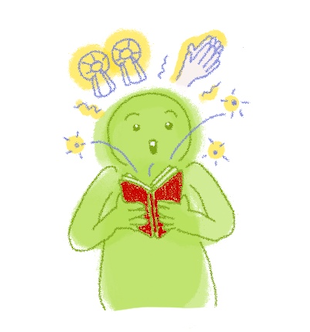
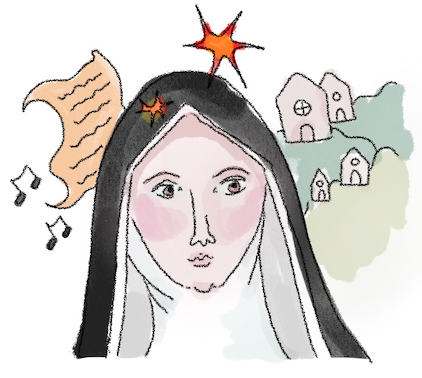
First, we read about Saint Hildegard of Bingen. Though she lived in the Middle Ages, I would consider her a Renaissance woman: she composed music; wrote about philosophy, natural science, and theology; invented her own language; and founded multiple monasteries. She also might have experienced migraines.
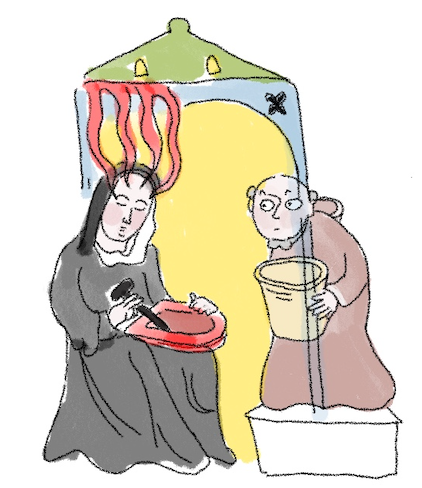
The first photo on Hildegard’s Wikipedia page shows an illustration of Hildegard from one of her many manuscripts. In this picture, four red tentacles are descending seemingly from heaven and piercing her head and face. This alone is a great representation of what it feels like to have a migraine.
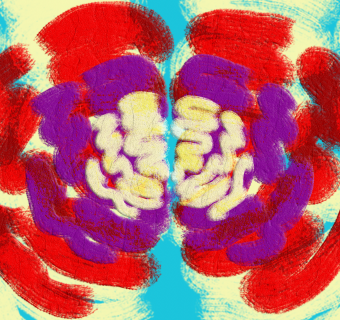
Hildegard’s Scivias is a compendium of her divine visions and is filled with fantastical illustrations of what she purportedly saw. Since 1913, scientists have believed that many of her visions were actually migraine auras: the flashes of light and color that often precede migraines (I also experience migraine auras, but unfortunately have not been able to make any cool drawings out of them).

Though this is obviously not direct evidence that she experienced migraines, I feel a sense of kinship with Hildegard creating her own language to better describe her divine visions. To me, this reflects one of the fundamental truths about migraines: the pain is not usually legible to others. Just consult the many online memes about how true migraine sufferers resort to remedies that seem ridiculous to outsiders for their pain, like putting hair clips on their eyebrows or chugging chocolate milk.
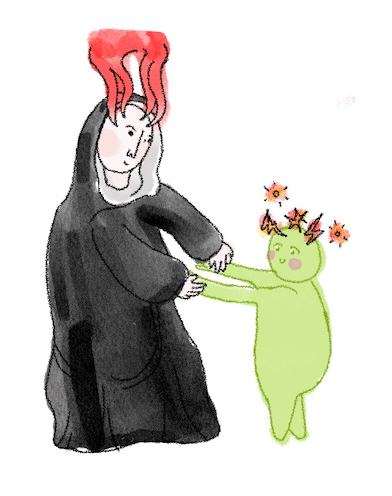
Hildegard wasn’t the only saint we read about whose pain was an integral part of her spiritual journey. Mystics Margery Kempe and Julian of Norwich also experienced prolonged illnesses before they received their spiritual gifts. Margery probably had what we would today understand as postpartum psychosis. She believed that Jesus cured her and, as a result, told her husband that she wouldn’t bear any more children—which, if nothing else, is a clever way to get out of having more children after already giving birth to thirteen. Julian actually asked God to make her ill because she believed it would awaken her spiritual abilities.
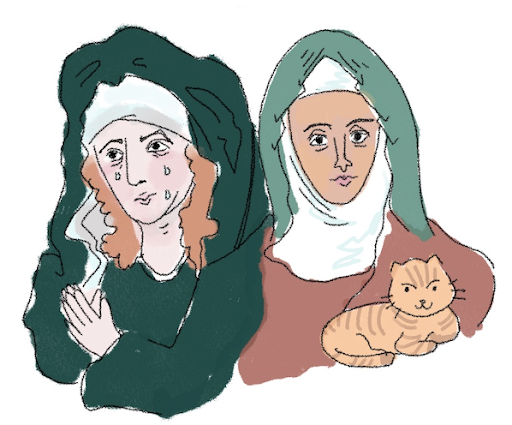
When I think of the positive impacts of my own migraines, if there can be said to be any, I personally turn to the secular icon Joan Didion. In her essay “In Bed,” written about her own chronic migraines, she writes at the very end that migraines act as a “circuit breaker.” The pain disrupts her everyday anxieties and reminds her to be grateful for what life can be when she isn’t in excruciating pain. I find myself inclined to agree with her. I’m not entirely convinced that the relief makes the pain worth it, but the feeling of being able to function after days spent cowering from unnecessary bright lights and loud sounds because of the pain in my head is one that I can only describe as miraculous.