Dear Beloved Reader,
Happy Halloween!
Over the years, I’ve been almost every basic Halloween costume under the sun—vampire, skeleton, black cat—you name it, I’ve probably dressed up as it. Except, surprisingly, I’ve never been a witch.
The reason for this is that there are simply too many kinds of witches that I could possibly be—how could I possibly choose just one for one night only? Perhaps in the future, I’ll commit to donning a big red bow and purple dress so that I may be Kiki from Kiki’s Delivery Service (featuring my resident black cat to complete the look). Or maybe, my best friend and I will embrace our inner theater kids next Halloween and dress up as Glinda and Elphaba. But for now, the sheer variety is overwhelming.
The theme for this issue, Coven, evolved from a fleeting thought I had while sitting on my kitchen floor with my roommates, discussing ideas for group Halloween costumes. Sitting on the kitchen floor and chatting is something we do regularly—to discuss our weeks, our upcoming plans, or just to vent. I always stand up after a session of kitchen floor-sitting feeling noticeably better than when I first sat down.
While we did end up deciding not to be witches for Halloween, the notion that a practice as small as sitting on some cold tile and debriefing could invigorate me so much stayed with me. There really is no need to dress up as a witch to incorporate magic into your life—there is magic in the mundane routines and practices that we engage in every day without thought. There is magic in lighting candles, brewing tea, caring for pets, and even sitting on the kitchen floor. And therefore, any group you share these routines with, in my opinion, could be considered your coven.
This cycle, our writers have toiled and troubled over the theme of Coven, each interpreting it in their own unique and witchy ways. CJ Ackerman-Garvin opens our issue with their unsettling short story, “Birdheart,” blurring the line between passion and monstrosity and ruminating on the unintended consequences of using magic on another without their consent. Maxine Prudhomme also explores toxic attachment in his lyrical poem, “Five Encounters with a Witch Who Knows My Throat,” which details five surreal confrontations between a narrator and an older, more cynical version of themself.
Emily Frost puts a Silicon Valley-spin on a familiar, morally grey witch in her short story, “medea goes to california.” Grace Traxler, in her dark academia short story “The Audition,” gives us a glimpse into the coven—or perhaps cult—of a drama department at a small, liberal arts college.
Faith Leslie and Geovanna Murphy bring us fall-feature pieces reminiscent of Teen Vogue. Faith Leslie brings all of the 2000s nostalgia in “My Favorite TV Witches Ranked,” reminding us that witches have always been more than just costumes and broomsticks. Geovanna Murphy sits down with two of her closest friends and self-proclaimed “All Hallows Eve experts” to compare and contrast their ideas of the perfect Halloween—and invites you to see who you identify with more.
Finally, Sydney McClellan closes out this special edition of Iris with “Headstones,” a love poem with a ghostly twist.
Thank you to Leigh Ann Carver, Annie Gibson, and the entire Social Media and Communications team for the incredible work that you all are doing on the Iris Instagram and in our newsletter. To my editorial team, Mary and Simone, thank you for working so diligently to get this issue to our readers just in time for Halloween!
Lastly, to our amazing new artists, Sara, Kathryn, and Mysha—welcome to Iris! You all are so incredibly talented, and we are so excited to work with you. Thank you for helping us bring our writers’ visions to life!
As always, happy reading!
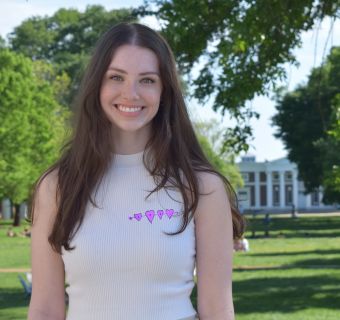
Lindsey Smith
Editor, Iris Magazine 2025-2026